

Astrocyte Kir4.1 expression level territorially controls excitatory transmission in the brain
Olga Tyurikova, Olga Kopach, Kaiyu Zheng, Daman Rathore, Neela Codadu, Sheng-Yi Wu, Yi Shen, Robert E. Campbell, Rob C. Wykes, Kirill Volynski, Leonid P. Savtchenko, Dmitri A. Rusakov
12
Feb
2025
Highlights
• Kir4.1 expression sets the speed of glutamate and potassium uptake by astrocytes
• Short-term presynaptic plasticity varies with Kir4.1 expression at local astrocytes
• Increased astrocyte enrichment in Kir4.1 attenuates cortical spreading depolarization
• Individual astrocytes can internally dissipate K+ during moderate neural activity
Summary
Intense brain activity elevates extracellular potassium, potentially leading to overexcitation and seizures. Astrocytes are crucial for restoring healthy potassium levels, and an emerging focus on their Kir4.1 channels has reopened the quest into the underlying mechanisms. We find that the Kir4.1 level in individual astrocytes sets the kinetics of their potassium and glutamate uptake current. Combining electrophysiology with multiplexed optical sensor imaging and FLIM reveals that rises in extracellular potassium would normally boost presynaptic Ca2+ entry and release probability at excitatory synapses unless such synapses are surrounded by the Kir4.1-overexpressing astrocytes. Inside the territories of Kir4.1-overexpressing astrocytes, high-frequency afferent stimulation fails to induce long-term synaptic potentiation, and the high-potassium waves of cortical spreading depolarization are markedly attenuated. Biophysical exploration explains how astrocytes can regulate local potassium homeostasis by engaging Kir4.1 channels. Our findings thus point to a fundamental astrocytic mechanism that can restrain the activity-driven rise of excitability in brain circuits.
Products
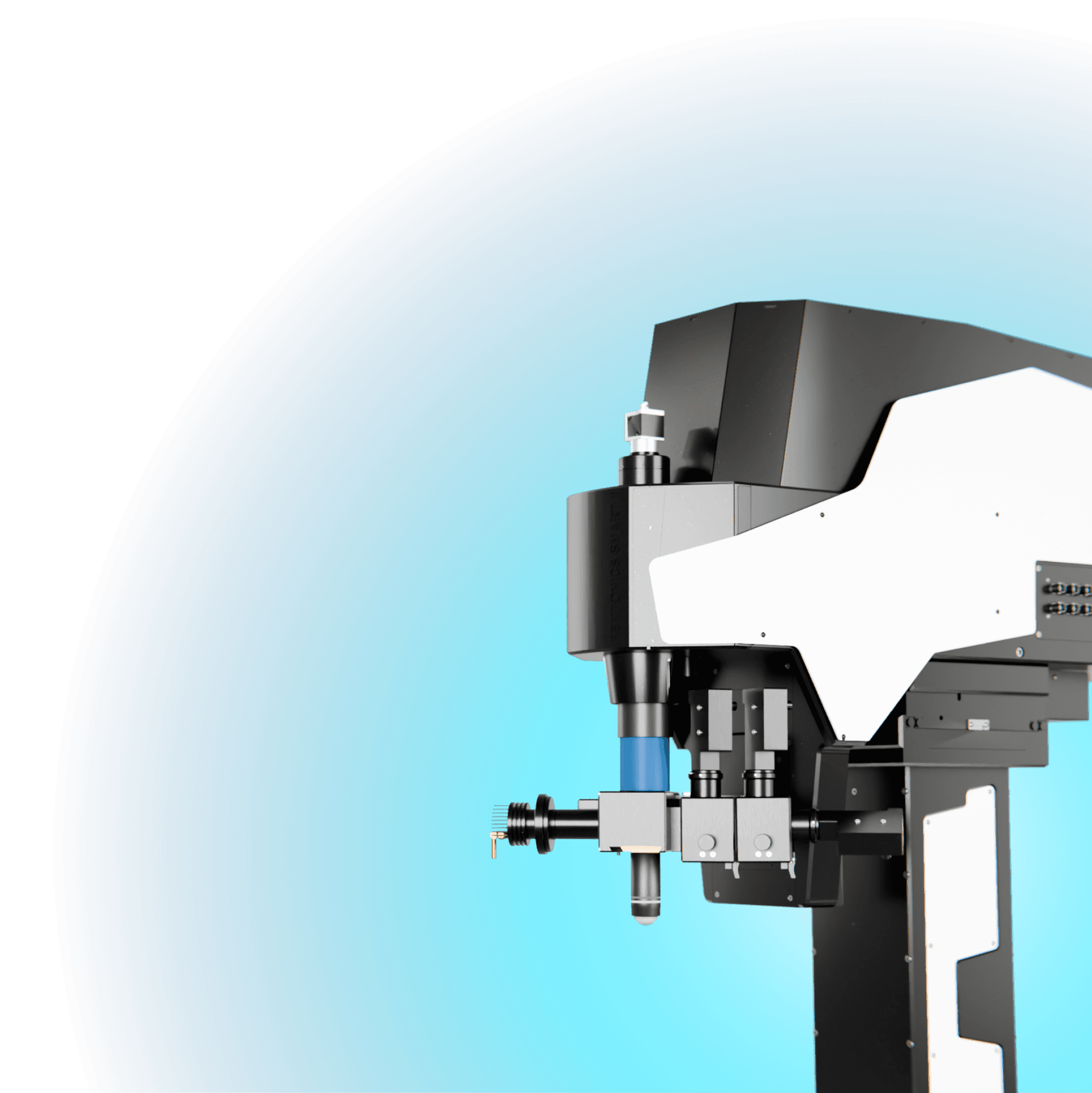
FEMTOSmart
A wide variety of optional modules to meet diverse research needs
View SystemApplications


Resonant scanning
High-speed laser scanning optimized for fast imaging and dynamic biological processes.

Galvo scanning
Precise and flexible laser scanning with full control over both scanning axes.