


Acousto-Optic scanning
No moving parts. Ultrafast scanning. Acousto-optic deflectors steer the laser beam in 3D at up to 100 kHz, letting the Femto3D Atlas record signal from thousands of neurons simultaneously.
About Acousto-Optic (AO) technology
The AO technology uses acousto-optic deflectors to control the position of a laser beam with exceptional speed and precision, without relying on mechanically moving scanning components. This allows the focal point to be repositioned on a microsecond timescale and freely controlled in three dimensions, making the system suitable not only for conventional imaging but also for high-speed 3D measurements and targeted photostimulation. AO-based scanning is particularly advantageous for studying living tissue and fast biological processes, as it provides high spatial and temporal resolution while illuminating only the regions of interest. This helps reduce unnecessary light exposure, photobleaching, and photodamage. As a result, AO technology offers an efficient solution for the real-time, three-dimensional investigation of complex cellular networks and dynamic physiological processes.
Advantages of the Acousto-Optic technology
Single point multiphoton (2P and 3P) excitation

High resolution (preserves maximal 2P and 3P resolution
High volume (~3 cubic mm)
Increased measurement speed
Other advantages
AO technology measurement samples


Voltage imaging in vitro JEDI-2P measurement combined with uncaging
FLIM lifetime trace, tilted: X: -5.9° Y: 4.1°

Skin of the mouse sole, SHG detected with the upper PMT, merged
Latest publications


The methods, explained by the people who use them
webinar
Tune in to the brain - 3D acousto-optic technology in multiphoton microscopy
Applications

FEMTO3D Atlas
Image more than 2,000 neurons in 3D, at 100 kilohertz speed, in freely behaving animals.
View System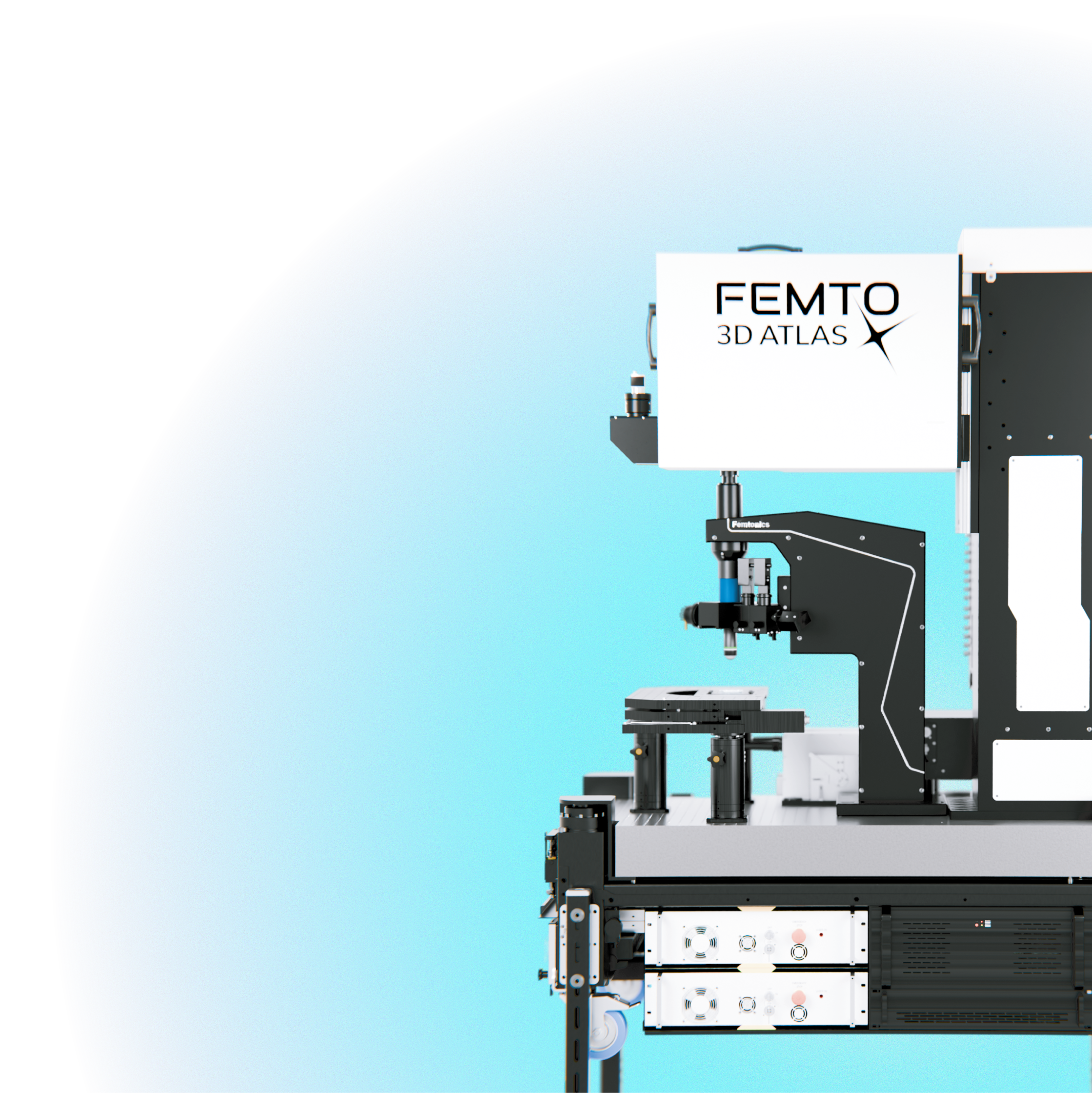
FEMTO3D Atlas Plug&Play
Full AOD performance, ready in under an hour
View System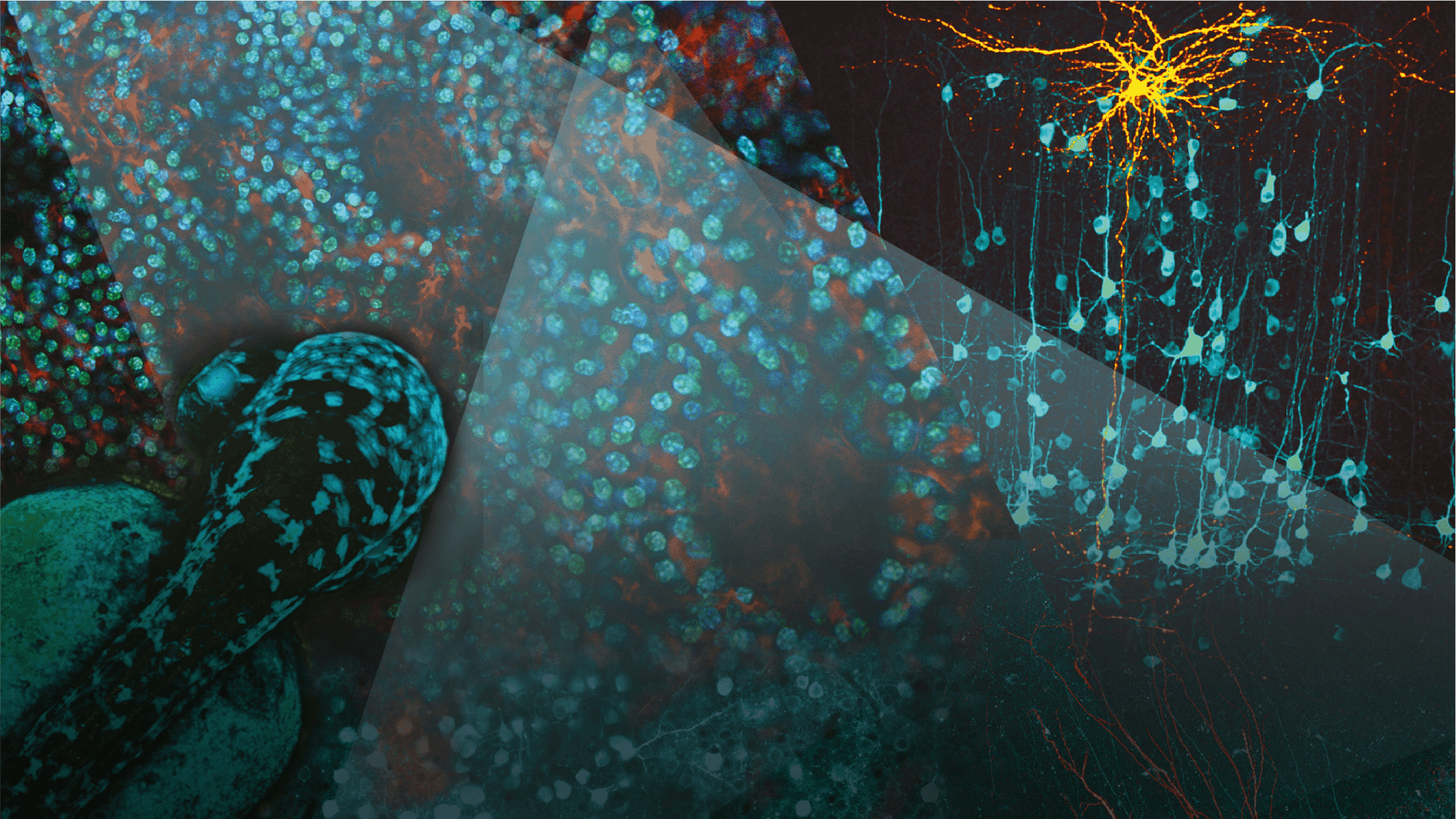
Power your experiments with Acousto-Optic Scanning
Talk to an application specialist about your research, or book a demo at one of our facilities.